

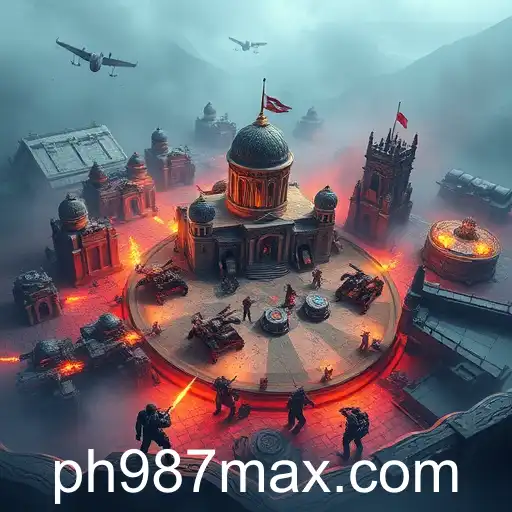

In today's digital age, the gaming landscape is vibrant and diverse, with strategy games holding a distinguished place among the myriad categories available to enthusiasts. Defined by their demand for careful planning, tactical maneuvering, and resource management, strategy games have captivated millions globally. The keyword 'ph987' leads us into a realm where both historical recreations and fantastical settings challenge players' intellect and decision-making prowess.
The origin of strategy games dates back centuries, drawing inspiration from classic board games like chess and Go, which have intrigued players with their multilayered depth and complexity. These ancient games laid the groundwork for the digital strategy games of today, paving the way for the development of intricate mechanics and immersive storytelling that distinguish modern titles.
In the digital realm, strategy games are usually divided into two primary sub-genres: real-time strategy (RTS) and turn-based strategy (TBS). RTS games such as "StarCraft" and "Age of Empires" require players to think quickly and act decisively, as decisions must be made in real-time without pausing the action. On the other hand, TBS games like "Civilization" and "XCOM" offer a more methodical approach, as players take turns evaluating their situation, plotting their next move, and executing their strategy.
A particularly captivating aspect of strategy games is their ability to simulate various environments, which can range from historical battles to futuristic worlds, enhancing players’ engagement through rich narratives and contexts. Leading titles like "Total War" harness historical settings, allowing players to rewrite history by leading armies and forming alliances, while games like "Command & Conquer" propel players into speculative futures with technologically advanced warfare.
Moreover, the strategy genre has evolved to include hybrid games, merging elements from role-playing games (RPGs), simulation, and even puzzle genres, adding new dimensions to gameplay. These innovative crossovers appeal to a broader audience, ensuring that strategy games continue to thrive in an ever-evolving market.
As developers explore new technologies, strategy games are being enhanced with cutting-edge graphics, complex AI opponents, and remarkable multiplayer experiences. The introduction of virtual reality (VR) and augmented reality (AR) could potentially revolutionize immersive gameplay, offering players a more tactile and encompassing experience.
Ultimately, strategy games not only provide entertainment but also cultivate critical thinking, problem-solving skills, and tactical acumen. With the genre's evolving nature and continuous innovation, strategy games promise to entertain and challenge players for generations to come, maintaining their status as a cornerstone of the gaming industry.

Explore the transformative changes in the online gaming landscape in 2025, focusing on technological advancements, player experiences, and industry trends.

The gaming industry stands at the cusp of a new era, driven by technological advances and community engagement.

Exploring the impact and evolution of the English game website PH987 amid changing technological and social dynamics.

Exploring the dynamic world of gaming, technological advancements, and the role of ph987 in 2025.

An exploration of how online gaming platforms like PH987 are shaping the entertainment industry.

Explore the gaming landscape of 2025 with insights into current trends, technological advancements, and the role of online platforms like 'ph987' in shaping the future of gaming.
